cardinaliscardinalis.ca
No. 01 · May 2026
A Tribute · Northern Cardinal
Essay · A Remembrance
The bird that came back.
A field study of Cardinalis cardinalis — and of the man who first pointed one out to me, through a screen door to the front yard, a long time ago.
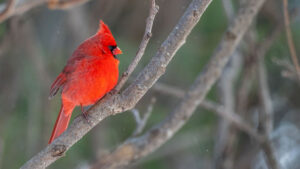
Photograph — Patrice Bouchard, Ontario, Canada
I. The opening
Some birds you have to learn. Cardinals teach you themselves.
My father taught me to wait. Not in so many words — he was not a man who explained things — but in long, quiet mornings at the kitchen window with a mug going cold in his hand and a feeder visible past the screen. Watch, he’d say. And after a while, something would arrive.
“You can’t pretend you didn’t see him. He stands on the rail and waits for you to be impressed.”
Cardinals don’t migrate. They stay through the worst months and keep their colour the entire time — no dull winter coat, no compromise. My father, who was patient about most things, had limited patience for birds that gave up and flew south. The cardinal was the one he respected. The one who showed up.
This site is a small archive of that bird. Photographs, behaviour, a few facts that are true even when you are not in the mood for facts. It is also, for me, a way of keeping my father near. The cardinal still arrives. I still look up. The two things have become, in my mind, the same thing.
Section II · Photographs
In the field.
Photographs collected from across the bird’s wide range — from Ontario backyards to Tennessee fences, Florida groves to Vineland holly. The cardinal is the same bird in all of them, and somehow never quite the same.
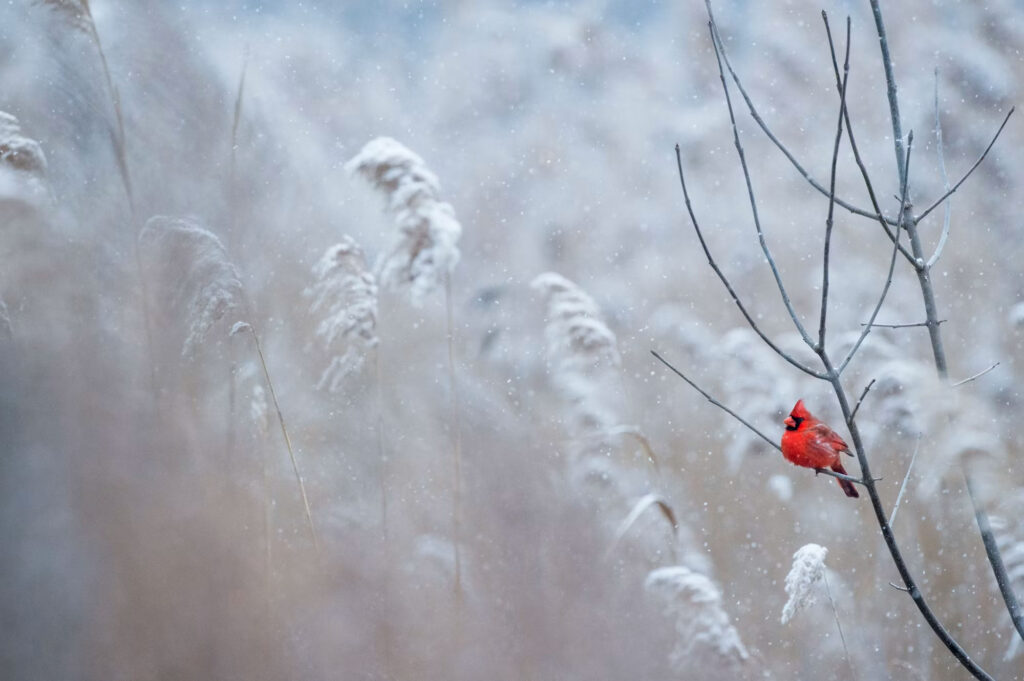
Falling snow, before lightPhoto · Ray Hennessy
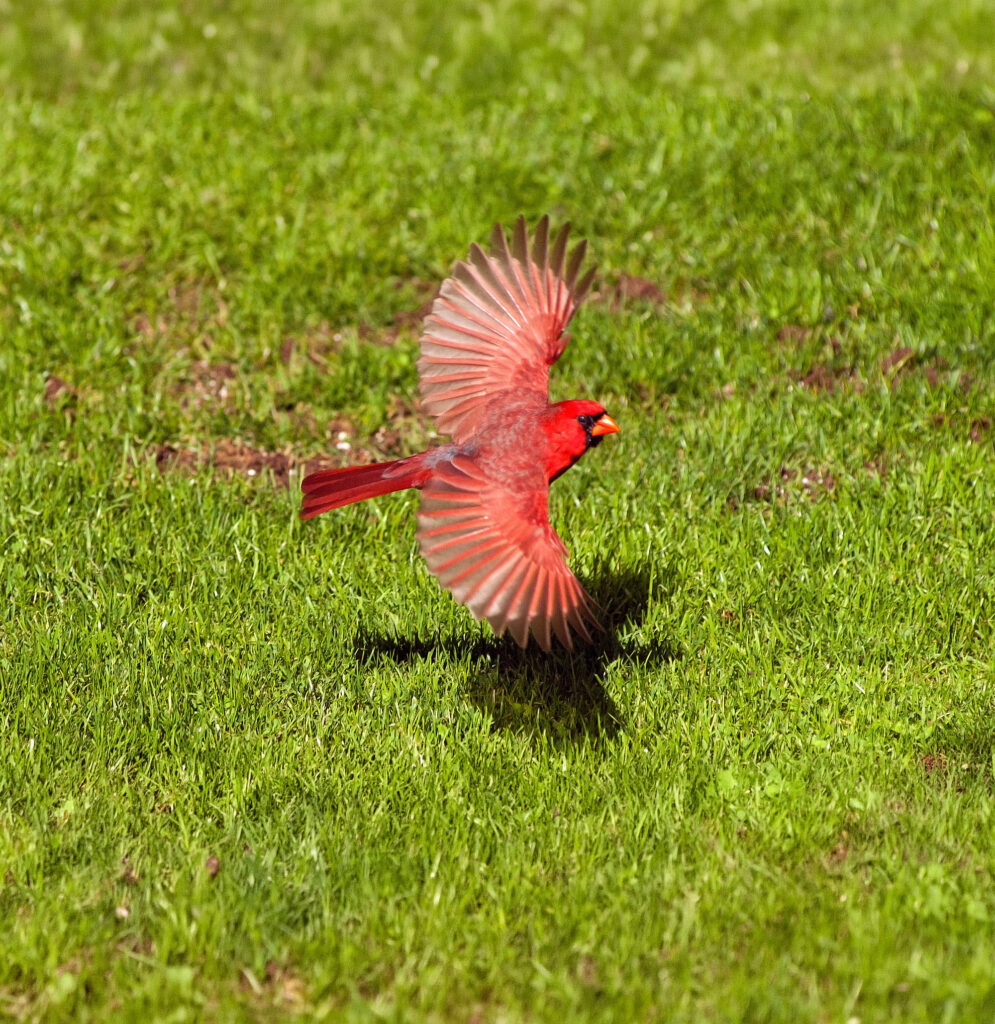
Holly, late DecemberPhoto · Ray Hennessy
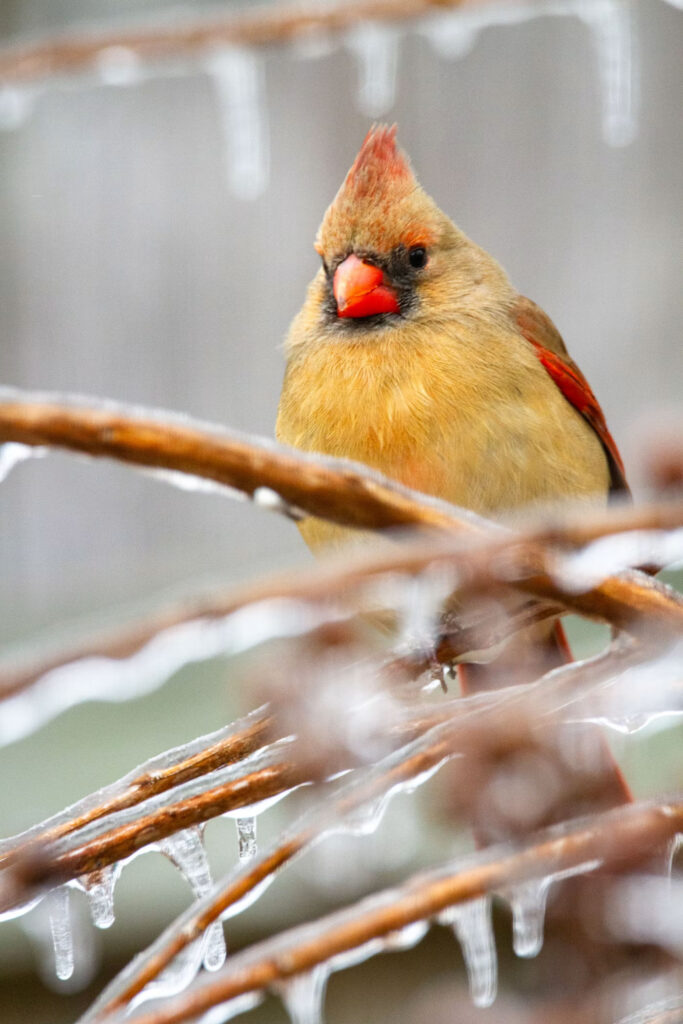
The female (often missed)Photo · Joshua J. Cotten
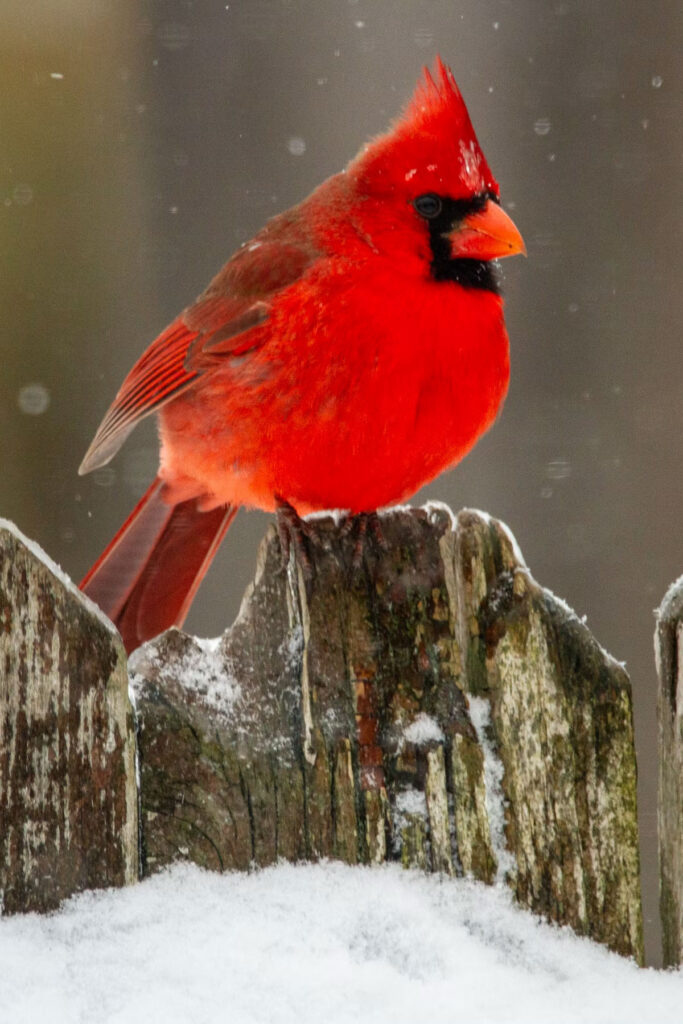
On the railPhoto · Joshua J. Cotten
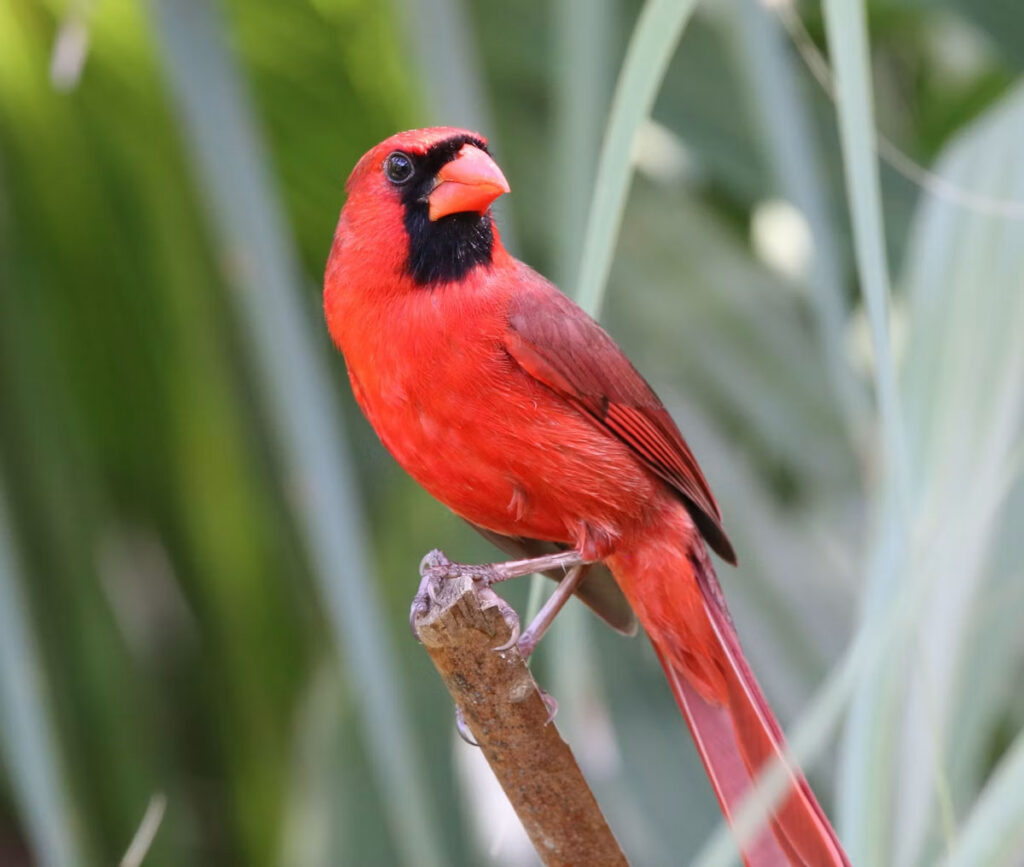
High perch, afternoonPhoto · Paul Crook
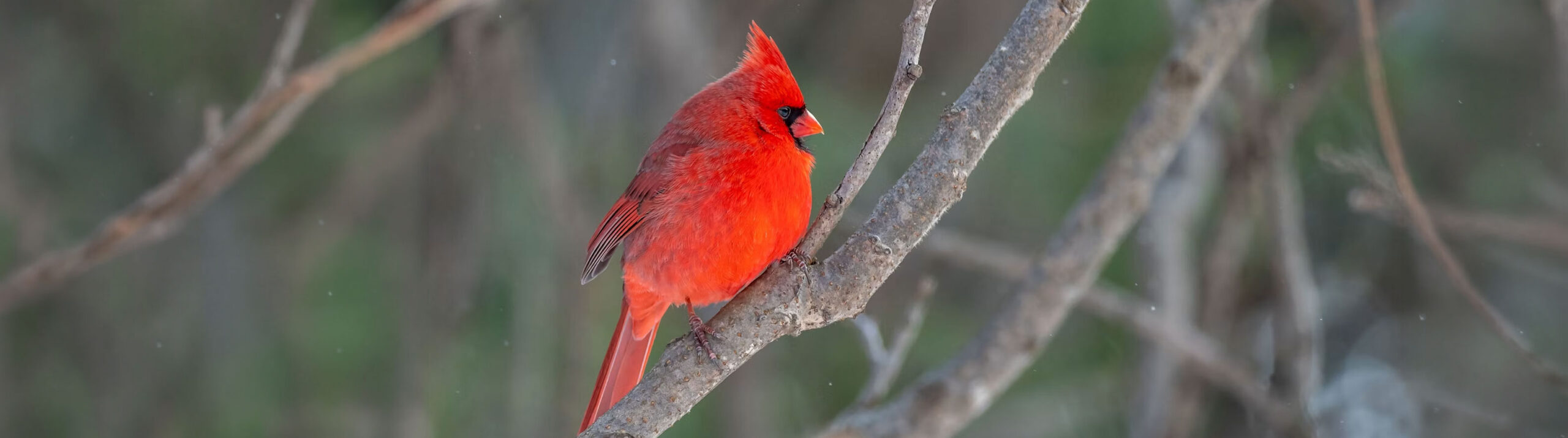
Ontario, a closer lookPhoto · Patrice Bouchard
Section III · A Field Card
Cardinalis cardinalis, by the numbers.
Year described
1758
First described by Carl Linnaeus as Loxia cardinalis in the 10th edition of Systema Naturae.
Body length
21–23cm
Slightly smaller than an American Robin. Wingspan 25–31 cm;
weight 42–48 grams.
State birds
7
Illinois, Indiana, Kentucky, North Carolina, Ohio, Virginia, West Virginia — more than any other species.
Subspecies
18
Distributed from southeastern Canada through Mexico, Belize and Guatemala. Mostly absent west of the Great Plains.
Songs per hour
200+
A male at the height of the breeding season — usually before sunrise, from an exposed high perch.
Migration
0km
Non-migratory. The pair you see in summer is the same pair you’ll see in February’s snow.
Section IV · A Lexicon
A field glossary.
A small dictionary of cardinal words — what they sound like, what they mean, and what to listen for when you sit by a window in winter.
cheer-cheer-cheer
song · territorial
The clear, ringing whistle most often heard at dawn. Both males and females sing — a rarity among North American songbirds. Females often sing from the nest, telling the male when to bring food and when to stay away.
what-cheer, what-cheer
song · paired
A two-note phrase. Pairs share song phrases and sometimes duet, the female sometimes producing a longer and slightly more complex song than her mate.
tik
call · contact / alarm
A sharp metallic chip. Used between paired birds as a quiet contact note and sharpened to a warning when a hawk passes overhead.
beak to beak
behaviour · courtship
A male passes a single seed from his bill directly into the female’s. It looks, to most observers, like kissing. It is one of the more reliable ways to confirm a bonded pair.
anting
behaviour · grooming
Deliberately placing red ants on the feathers. The formic acid is thought to repel parasites. Awkward to watch; surprisingly common.
crest
anatomy · signal
The pointed feathers atop the head, present in both sexes. Raised in alarm or display, lowered when the bird is at ease — a small flag with two settings.
Section V · Partners
Mostly, they stay.
Cardinals are monogamous, and many pairs remain together year after year, returning to the same territory each spring. Early in the breeding season the male brings the female food — sunflower seeds, mostly — and feeds her from his beak to hers. To anyone watching from a kitchen window, it looks like exactly what it is.
The female does most of the building. The male shuttles materials, sings from a nearby branch, and stays close once she begins to incubate. After the chicks hatch, both parents feed them. After they fledge — sometimes only nine days later — he often takes the brood while she begins the next.
Ornithologists describe about one in five pairs as eventually “separating,” the polite term. The other four return.
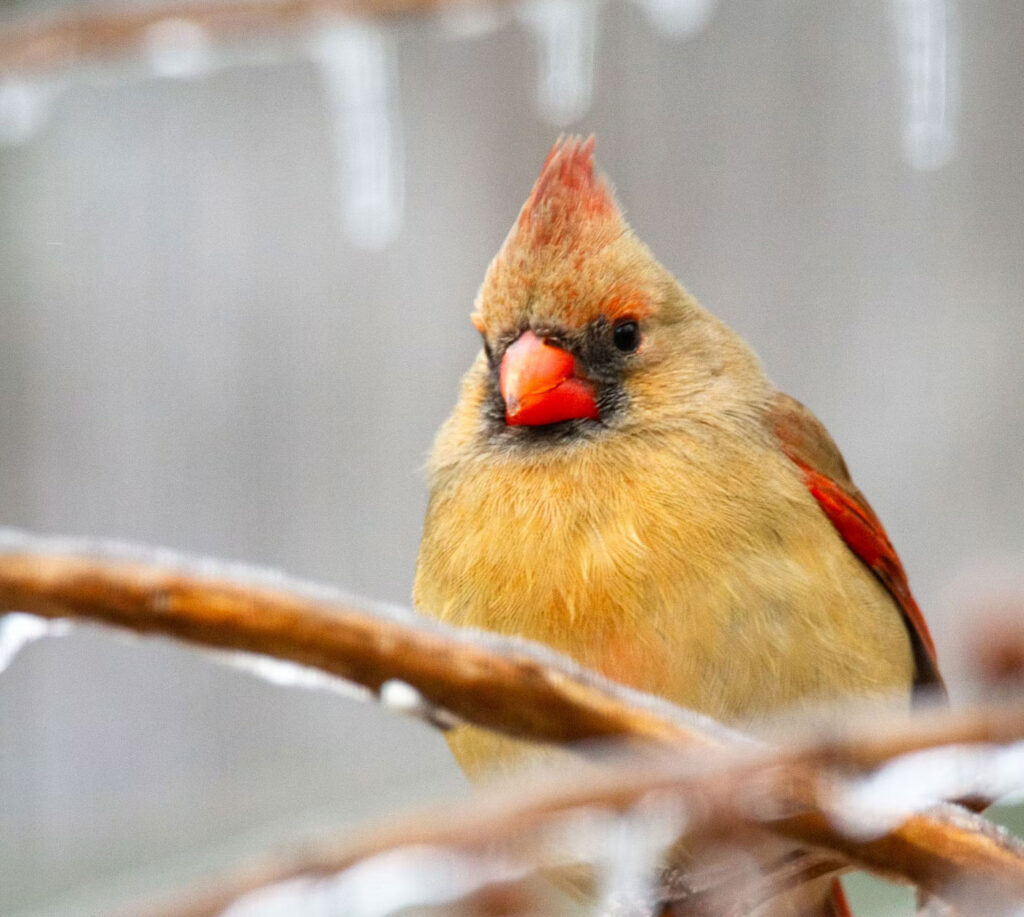
A close
When a cardinal appears, an angel is near.
It is one of the most common folk beliefs about the bird. I am told it again every time someone in our family loses someone — the cardinal in the yard, the red flash at the feeder, the moment a person stops and forgets, briefly, what they were doing.
I don’t know what to do with the belief, exactly. I am a person who likes facts. The cardinal does not migrate; the cardinal eats sunflower seeds; the cardinal’s red comes from carotenoid pigments in the berries it eats. These things are also true.
And still — when one lands on my fence and waits, the way they always did when my father stood at the screen door — I stop what I am doing. I think about him. I think about how he taught me to wait. I think about how, sometimes, the answer is to sit very still until the right thing arrives.
for Papi — with love.
About this archive
A small tribute to my father — and to the Northern Cardinal he loved.
Sources: All About Birds (Cornell Lab of Ornithology), Audubon Field Guide, Birds of the World, American Bird Conservancy.
Type
Fraunces (display)
Inter (interface)
JetBrains Mono (caption)
Photography
Patrice Bouchard
Ray Hennessy
Joshua J. Cotten
Paul Crook
(via Unsplash)
Domain
cardinaliscardinalis.ca
Ontario, Canada
© 2026